
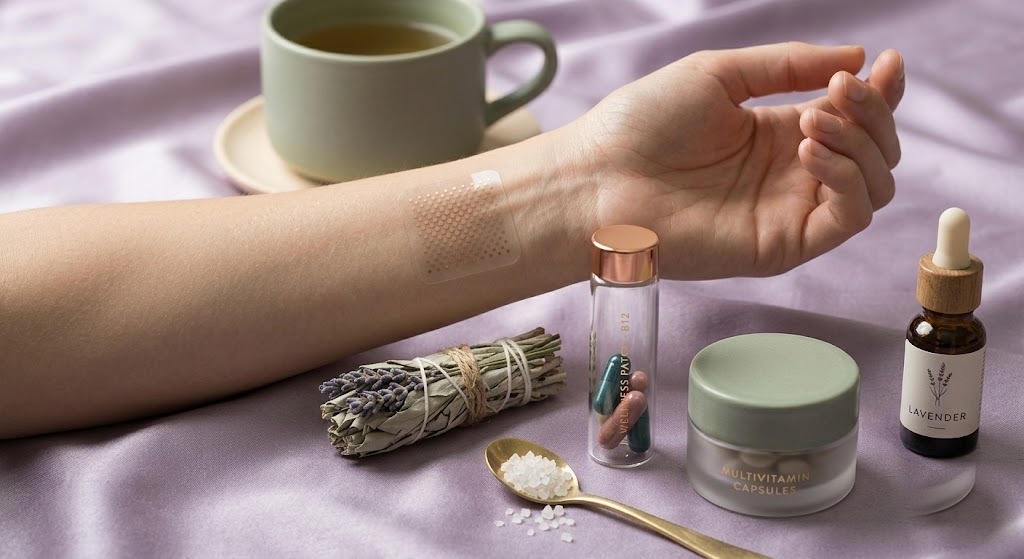
When evaluating any supplement, most people ask two questions: what's in it, and does the ingredient have evidence behind it? These are important questions — but they miss a third question that can make or break efficacy: does the ingredient actually reach the target tissue?
Bioavailability — the proportion of a substance that enters circulation when introduced to the body — varies dramatically between delivery methods. For some compounds, the difference is negligible. For others, it's the difference between something working and something being essentially inert.
The Problem with Oral Supplements
The oral route is convenient and familiar, but it comes with a significant physiological obstacle: the digestive system and the liver act as gatekeepers for everything that enters the bloodstream.
When you swallow a capsule or tablet, it must survive stomach acid, pass through the gut wall, travel through the portal vein to the liver, and survive hepatic metabolism — all before reaching systemic circulation. This process, called first-pass metabolism, can destroy a significant proportion of a compound before it ever has a chance to exert an effect.
Berberine is a well-studied example of a compound with strong evidence in clinical settings but notoriously low oral bioavailability. Estimates suggest only 5–15% of orally ingested berberine reaches systemic circulation — the rest is metabolized in the gut and liver before it can act systemically.
How Transdermal Delivery Works
Transdermal delivery bypasses the digestive system entirely. When a compound is delivered via the skin (dermis), it absorbs through the outer skin layers into the capillaries beneath, entering venous circulation directly without passing through the liver first.
The key advantages of this route:
- Avoids first-pass metabolism — higher proportion of the compound reaches circulation
- Steady-state delivery — patches release compounds over hours rather than in a single spike, maintaining more stable blood levels
- No GI irritation — compounds that cause digestive discomfort in oral form are often well-tolerated transdermally
- Consistent dosing — unlike pills that require daily timing, patches deliver a continuous dose once applied
The Comparison at a Glance
| Factor | Oral Pills/Capsules | Transdermal Patch |
|---|---|---|
| Bioavailability (berberine) | ~5–15% | Significantly higher |
| Delivery pattern | Single peak, then drops | Steady 8-hour release |
| GI side effects | Common at effective doses | Typically none |
| Daily adherence | Requires timed dosing | Apply once, no timing needed |
| Compound stability | Degrades in stomach acid | Stable until absorbed |
Not All Compounds Benefit Equally
It's worth noting that transdermal delivery isn't universally superior — it depends on the compound's molecular weight, lipophilicity (fat solubility), and target tissues. Compounds that need to reach the gut directly (like probiotics) can't be improved by transdermal delivery. But for systemic metabolic compounds like berberine that suffer from first-pass metabolism, the route represents a meaningful advancement.
The Practical Takeaway
If you've tried berberine supplements in capsule form without the results the clinical literature suggests, delivery method may be part of the answer. The science behind the compound is robust — the question is whether the form you're taking is actually getting enough of it where it needs to go.
Understanding your absorption picture is just one piece of understanding your overall metabolic profile.