
Berberine has been used in traditional Chinese and Ayurvedic medicine for over 2,500 years — but it's only in the past two decades that Western science has begun to understand why it works. What's emerged from hundreds of clinical trials is a picture of a compound with genuinely remarkable effects on metabolic function.
It's not a miracle supplement. But for women navigating metabolic changes after 35, the science behind berberine is worth understanding.
What Is Berberine?
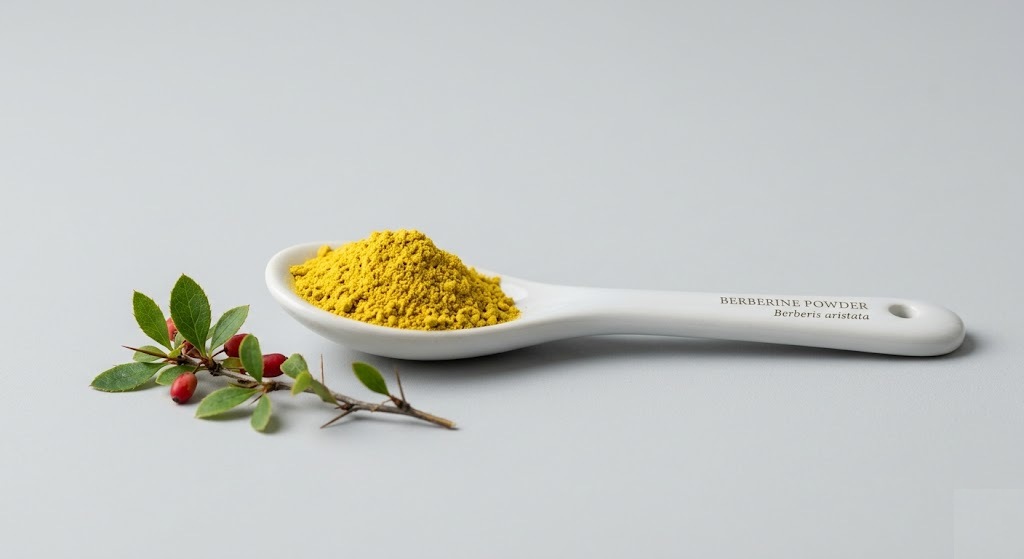
Berberine is an alkaloid — a naturally occurring plant compound — found in the roots, stems, and bark of several plants including barberry, goldenseal, and Oregon grape. It gives these plants their characteristic bright yellow color. Chemically, it belongs to a class called isoquinoline alkaloids, and its effects on human biology are driven primarily by a single mechanism that has major downstream consequences.
The AMPK Mechanism
Berberine's primary metabolic effect is the activation of AMP-activated protein kinase (AMPK) — often described as the body's "metabolic master switch." AMPK is an enzyme that regulates energy balance at the cellular level. When activated, it:
- Promotes fatty acid oxidation (fat burning) in muscle and liver cells
- Suppresses fatty acid synthesis (new fat creation)
- Improves glucose uptake in muscles, reducing blood sugar
- Enhances insulin sensitivity
- Reduces triglyceride production in the liver
The significance of this mechanism becomes clearer when you consider that AMPK activity tends to decline with age — which is one reason metabolic function becomes less efficient in our thirties and forties. Berberine, in effect, helps restore a level of metabolic activity that the aging process suppresses.
A frequently cited 2008 study in Metabolism found that berberine reduced HbA1c, fasting blood glucose, and blood lipids in type 2 diabetics as effectively as metformin — the most widely prescribed diabetes medication in the world. While berberine isn't a pharmaceutical, this comparison speaks to the potency of its AMPK activation effect.
Effects on Weight and Body Composition
Beyond blood sugar, berberine has demonstrated meaningful effects on body weight and composition in clinical settings:
- A 2012 meta-analysis of 14 randomized trials found berberine significantly reduced BMI, waist circumference, and total cholesterol compared to placebo
- Berberine inhibits the differentiation of pre-fat cells into mature fat cells (adipogenesis) — essentially reducing the body's capacity to create new fat tissue
- It modulates gut microbiome composition in ways that support metabolic health, including increasing production of short-chain fatty acids
Why Delivery Method Matters
One of berberine's limitations in traditional oral supplement form is bioavailability. When taken as a capsule or tablet, berberine is rapidly metabolized in the gut and liver before it reaches systemic circulation — a phenomenon called "first-pass metabolism." Studies estimate that only 5% of orally consumed berberine actually reaches the bloodstream.
This is why delivery innovation — including transdermal (patch) delivery — has attracted significant attention. By bypassing the digestive system entirely, transdermal delivery can dramatically improve how much berberine actually reaches the target tissues. Learn more about why delivery method matters →
Supporting Compounds: The Synergy Factor
Research increasingly suggests that berberine works best in combination with complementary compounds that support different aspects of metabolic function:
- Fucoxanthin (from brown seaweed): Activates thermogenesis in fat tissue, promotes fatty acid oxidation independently of AMPK
- Pomegranate oil: Rich in punicic acid, which has been shown to improve insulin sensitivity and reduce inflammation markers
- Vitamin B6 & B12: Essential cofactors for the enzymatic processes berberine influences
What the Evidence Says, Realistically
Berberine is not a shortcut. The studies that show meaningful results consistently involve it as part of a broader approach — combined with dietary modification and physical activity. But the evidence is strong enough that dismissing it as "just another supplement" misrepresents the science.
For women whose metabolism is being affected by age-related hormonal changes, berberine represents one of the more evidence-backed natural interventions available. Understanding whether it's appropriate for your specific situation is a good starting point.